Protecting Supply Chain Continuity and Cold Storage Facilities from Catastrophic Sprinkler Leaks
Cold storage facilities operate within narrow temperature, safety, and delivery margins. Refrigerated warehouses, blast freezers, and automated storage and retrieval systems hold high-value products in dense environments where a single sprinkler leak can quickly become a major operational event.
In a sub-zero facility, water does not simply fall to the floor and create a cleanup task. It can freeze into heavy formations, damage racking and electrical infrastructure, compromise temperature-sensitive inventory, and force critical areas offline. The resulting disruption can extend well beyond the sprinkler system, affecting fulfillment schedules, customer commitments, regulatory obligations, and the continuity of the cold chain.
Protecting these facilities requires a shift from reactive pipe repair to proactive asset protection. By monitoring internal pipe health, controlling oxygen and moisture, and planning interventions before a breach occurs, facility leaders can reduce the likelihood that a preventable corrosion problem becomes a supply chain disruption.
The Critical Intersection of Cold Storage and Fire Protection
The High-Stakes Cold Chain Environment
Cold storage facilities are designed for precision. Temperature-sensitive products may include food, beverages, biological materials, pharmaceuticals, and other cargo that cannot tolerate extended exposure outside its required range.
Refrigerated warehouses and blast freezers also create challenging working conditions for fire protection systems. Piping may run through unheated spaces, above dense storage, or alongside automated equipment. Narrow aisles and high rack structures can make access difficult even under normal conditions. In an automated cold storage environment, a repair may require coordinated shutdowns across conveyors, robotics, controls, and inventory handling systems.
There is little room for an unplanned impairment. A leak can affect the facility’s fire protection status while also creating a physical hazard in the same area where inventory, equipment, and workers are concentrated.
Why Fire Suppression Leaks Are Uniquely Devastating
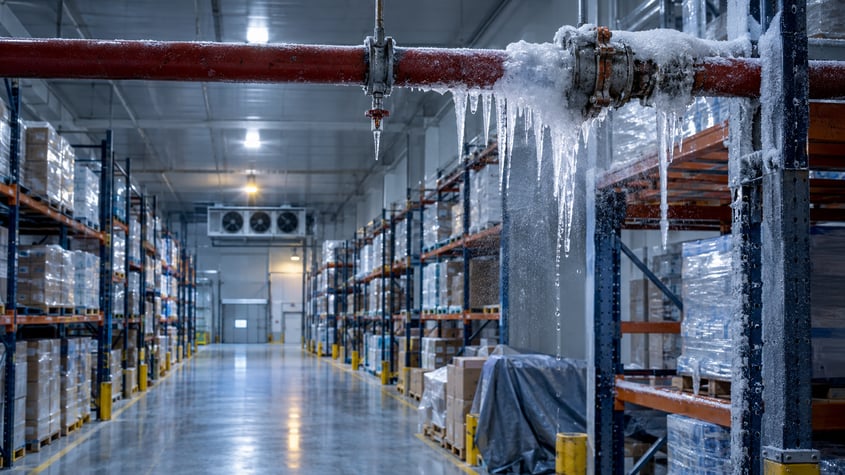
A sprinkler leak in a warm warehouse may be disruptive. In a sub-zero environment, the same event can escalate quickly as water freezes on floors, racks, equipment, and building components.
Ice expansion can create additional structural and access concerns. Frozen water can restrict aisles, damage packaging, load racks, electrical conduits, sensors, and automated picking systems. Products may be exposed to contaminated water, temperature excursions, or the loss of the controlled environment required for safe storage.
The facility may need to isolate affected zones, relocate stock, suspend picking activity, and bring in specialized crews. What begins as a pinhole leak can become a cold-chain event with consequences across operations, quality, safety, and customer service.
The Strategic Shift
The most effective strategy is to manage internal pipe health before the system produces visible symptoms. That means identifying corrosion, moisture accumulation, slope issues, and potential ice-plug conditions while the facility is operating normally.
A proactive program gives owners more control over the timing, scope, and cost of intervention. It also creates a clearer connection between fire protection maintenance and supply chain resilience. The objective is not simply to prevent a repair. It is to protect the facility’s ability to receive, store, pick, and distribute temperature-sensitive products without an avoidable interruption.
Mechanics of Failure: Corrosion and Ice Plugging in Cold Systems
The Science of Internal Oxygen Corrosion
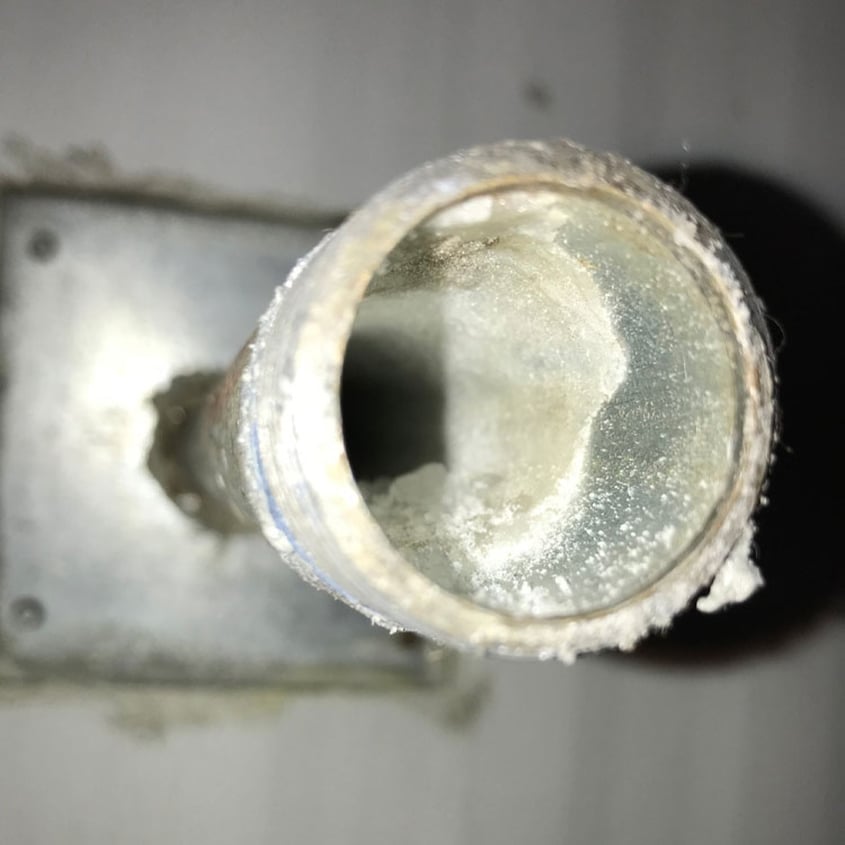
Steel sprinkler pipe can degrade internally when bare metal, moisture, and oxygen are present together. Oxygen supports the electrochemical reaction that converts the pipe surface into corrosion products. Over time, localized pitting can reduce wall thickness and create a path to failure.
Cold storage conditions can make this process more difficult to observe. The external environment may look controlled while moisture collects inside the piping network. Rust scale and debris may remain hidden until they restrict flow, damage a component, or contribute to a leak.
The relevant question is not whether the system has experienced a visible failure. It is whether the operating conditions are allowing internal corrosion to progress without detection.
The Dry and Preaction System Traps
Dry and preaction systems are commonly used in unheated areas because they help prevent water from freezing inside the piping before system activation. However, the air used to maintain pressure can introduce the oxygen and moisture that support internal corrosion.
A standard compressor draws in ambient air and repeatedly replenishes the system as pressure changes. Each cycle can add another charge of oxygen and humidity. In a cold facility, that moisture may condense at low points, branch lines, fittings, or areas where the pipe’s pitch is compromised.
The system designed to manage freeze risk can therefore develop a different vulnerability: a continuing internal supply of oxygen and moisture that accelerates rust and increases the likelihood of localized pipe failure.
The Dew Point Factor and Condensation
Ambient air carries moisture. When a standard compressor pushes that air into cold sprinkler piping, the internal temperature can fall below the air’s dew point. Water then condenses inside the pipe and can freeze in areas where it collects.
Localized condensation is especially concerning when it forms near low points, sags, fittings, or partially obstructed sections. A small amount of frozen moisture can restrict flow. Repeated freeze and thaw cycles can increase the stress placed on the piping and create conditions for ice plugs to develop.
Dry nitrogen changes the internal environment by reducing moisture and lowering the dew point. The goal is to create a stable gas condition that remains dry enough to prevent condensation and ice formation under the facility’s operating temperatures.
Why Galvanized Pipe Is Not a Complete Solution
Galvanized pipe is often described as corrosion-resistant, but that does not mean it is immune to localized internal attack. In cold, moist environments, small areas of pitting can progress beneath or around protective surfaces. The pipe may retain a clean external appearance while its internal wall thickness declines.
A material choice alone does not eliminate the need for condition monitoring or oxygen and moisture management. System design, operating gas, drainage, slope, maintenance practices, and the actual condition of the installed piping all contribute to long-term performance.
The Hidden Pitfalls of Reactive Pipe Maintenance
The Flaw of Find-and-Fix Patching
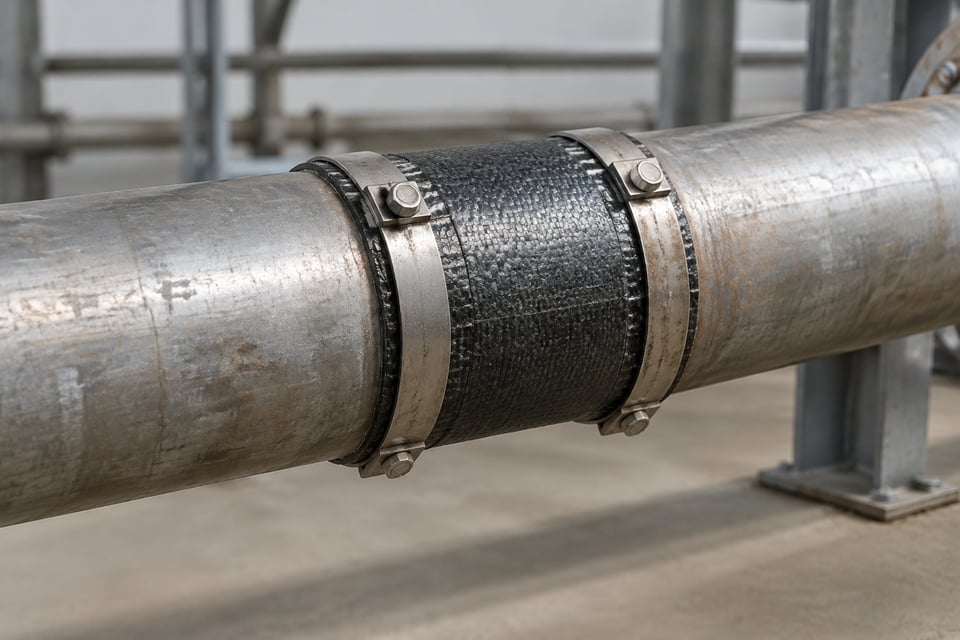
A pinhole repair restores a specific location. It does not necessarily correct the environment that produced the leak.
Clamping a leak or replacing a single length of pipe can leave the surrounding network exposed to the same oxygen, moisture, and slope conditions. In a large cold storage system, the repaired section may represent only a small portion of the total piping. A single intervention can therefore leave as much as 95% of the active corrosion condition unaddressed, depending on the extent of system degradation.
The commercial and operational risk is that the next failure may occur in a different aisle, above a different product zone, or near a more difficult piece of automated equipment. Repeating isolated repairs can create the appearance of progress while the underlying problem continues.
The Fresh Oxygen and Moisture Injection Cycle
Reactive repairs often require draining, opening, repairing, and repressurizing the system. Each step can introduce new air and moisture into the network.
Fresh oxygen can attack newly exposed metal in the replacement section as well as the already-thinning surfaces in surrounding pipe. Humidity introduced during repressurization can condense again as the system returns to low temperatures. Without a change in the gas environment, the repair process may unintentionally reinforce the conditions that caused the original failure.
A proactive strategy considers the entire cycle. It addresses not only where the leak occurred, but also how oxygen and moisture enter the system and how they can be controlled after the intervention.
Misdiagnosing System Failures
Rust flakes, scale, and ice can be mistaken for isolated mechanical problems. A blocked drain, restricted valve, or damaged sprinkler component may be treated as a one-off event when it is actually evidence of broader internal degradation.
That distinction matters in cold storage because access is expensive and every impairment carries operational consequences. Before authorizing repeated spot repairs, facility teams should determine whether the system is showing signs of a network-wide condition that requires inspection, testing, or a corrosion-control plan.
Operational and Financial Consequences for Cold Logistics
Thermal Shock and Facility Damage
A sprinkler leak can create damage well beyond wet inventory. In sub-zero spaces, water freezes into heavy masses that can place stress on rack components, ceiling systems, electrical conduits, insulation, sensors, and automated equipment.
Ice can also create access restrictions and secondary hazards. Teams may need to isolate equipment, remove product from affected zones, and use specialized methods to restore safe operating conditions. The cost is not limited to the water released from the pipe. It includes the time and coordination required to recover the facility.
Product Spoilage and Regulatory Rejection
Cold-chain products can be rejected or destroyed when exposed to contaminated water, ice, temperature excursions, or uncertain storage conditions. Food and beverage facilities may need to assess impacts under FDA, USDA, or FSMA requirements. Pharmaceutical and biological products may require additional quality review, documentation, and disposition decisions.
The outcome depends on the product, facility, exposure, and applicable requirements. The business case for prevention is clear: keeping sprinkler water and ice away from inventory protects both product value and the records needed to demonstrate compliant handling.
Sub-Zero Repair Friction
Repairs in temperatures ranging from -10°F to -20°F create physical and logistical challenges. Crews may need specialized clothing, warming procedures, access equipment, and additional time to work safely. Lifts and scaffolding can obstruct narrow aisles and interfere with picking, storage, and replenishment activity.
A repair that would be manageable in a standard warehouse can become a complex project in a freezer. Labor premiums, extended impairment periods, product moves, and coordination with operations can significantly increase the total cost.
Supply Chain Bottlenecks and Penalty Fees
Unplanned downtime can interrupt receiving, storage, picking, and outbound distribution. Missed shipment windows may lead to service-level penalties, expedited freight, customer dissatisfaction, and strained vendor relationships.
For a facility that supports multiple locations or major retail and food-service customers, one impaired site can create pressure across the broader distribution network. Protecting sprinkler piping is therefore part of protecting the commitments that keep the supply chain moving.
Insurer Mandates and Premium Escalation
Major property underwriters, including FM Global, evaluate the reliability of fire protection systems and the potential severity of water-related losses. A history of sprinkler leaks, unresolved corrosion, or recurring impairments can lead to additional risk-improvement recommendations and greater scrutiny during underwriting or renewal.
A documented inspection and corrosion-control program gives facility leaders a stronger basis for demonstrating that the risk is being actively managed. It also helps align fire protection decisions with the facility’s broader property-loss-prevention strategy.
Proactive Health Monitoring for Low-Temperature Piping
Ultrasonic Wall Thickness Testing
Ultrasonic wall thickness testing, or UTT, uses non-destructive methods to measure remaining pipe thickness at selected points. It can help teams identify metal loss without removing large sections of pipe or interrupting normal warehouse operations.
A testing program should be designed around the system’s risk profile. Locations may include areas with known moisture accumulation, low points, branch lines, older pipe, previous leak activity, or conditions that make corrosion more likely. Repeated measurements can help establish trends and support more reliable capital planning.
Internal Borescope Diagnostics
Borescope inspections provide visual information about the inside of the piping network. Cameras can help identify standing water pockets, rust scale, debris, and potential ice blockages in branch lines and low-point drains.
The value of a borescope is not just the image itself. Visual evidence helps facility teams connect a technical condition to an operational decision. It can show why a recurring leak deserves broader attention or why a targeted repair is appropriate instead of a full-system replacement.
Evaluating Pitch and Slope Integrity
Dry-pipe networks depend on appropriate pitch and drainage. Building movement, structural settling, rack deflection, installation changes, or sagging supports can create low spots where moisture collects.
Mapping these areas helps the engineering team determine whether the system is draining as intended. It also identifies locations where a corrosion-control solution should be paired with corrective work on slope, supports, drains, or access.
Data-Driven Capital Planning
Inspection data gives facility leaders a way to prioritize. Rather than waiting for a leak to determine the project scope, teams can rank piping segments by wall loss, moisture exposure, prior failures, accessibility, inventory risk, and operational impact.
This approach helps distinguish targeted repairs from conditions that warrant broader replacement or system protection. It also gives finance and operations leaders a defensible basis for budgeting before an emergency forces a much larger project.
Engineering Prevention: Eliminating Oxygen with Nitrogen Gas
The Principle of Nitrogen Inerting
Nitrogen inerting replaces oxygen-rich compressed air with high-purity nitrogen gas. When nitrogen is produced at 98% or greater purity and distributed through the system, it reduces the oxygen available to support electrochemical corrosion.
The purpose is not simply to change the pressure-maintenance equipment. It is to establish a less corrosive internal environment throughout the piping network and maintain that environment over time.
Active Moisture Control and Dew Point Suppression
Dry nitrogen can also help control the moisture conditions that create condensation and ice. By lowering the internal dew point below the facility’s sub-zero operating temperature, the system can reduce the likelihood that water will condense and freeze inside the pipe.
This is especially important in locations where trapped moisture could become an ice plug. The design should account for system volume, operating temperature, venting, pressure requirements, and the facility’s actual environmental conditions.
System Venting and Continuous Purging
A nitrogen system uses controlled venting and purging to remove ambient air and establish a stable nitrogen blanket. Once the target gas condition is reached, ongoing pressure maintenance helps preserve the lower-oxygen, lower-moisture environment.
The implementation should be engineered for the specific dry or preaction network. Proper controls, vent locations, monitoring, and commissioning help ensure that the system is not only installed, but also operating as intended.
Compare Total Cost of Ownership
The financial case should compare the upfront nitrogen investment with the cumulative cost of leak repairs, ruined stock, ice damage, specialized labor, impaired operations, emergency access, and facility downtime.
A cold storage owner may not experience every cost in every scenario. The purpose of a TCO model is to show the range of exposure and identify which assumptions matter most. When the analysis includes both direct repair cost and supply chain consequences, nitrogen protection can be evaluated as an asset-continuity strategy rather than an equipment upgrade.
|
Risk area |
Potential cold-chain impact | Proactive protection focus |
| Internal corrosion | Pinhole leaks, wall thinning, restricted flow, and unplanned impairment | Oxygen reduction, inspection data, and targeted condition management |
| Moisture and condensation | Ice plugs, blocked drainage, and reduced system reliability | Dry nitrogen, dew point suppression, venting, and slope review |
| Leak or ice event | Inventory exposure, equipment damage, aisle closures, and facility shutdown | Early detection, planned repairs, and reduced failure probability |
| Operational interruption | Missed distribution commitments, penalty fees, and vendor strain | Continuity planning tied to fire protection asset health |
| Insurance and compliance | Additional risk-improvement requirements and more difficult renewal discussions | Documented inspection, mitigation, and loss-prevention strategy |
Navigating Fire Codes and Industry Standards
NFPA 13 Compliance
NFPA 13 provides important context for dry-pipe system design, slope, drainage, water delivery, and the selection of components that support reliable fire protection performance. When engineers evaluate nitrogen and corrosion-control strategies, the recommendation should be connected to the edition adopted by the jurisdiction and the project’s qualified design authority.
The goal is to integrate corrosion and moisture management into responsible system design, not to treat it as a separate add-on after the system has been installed.
NFPA 25 Inspection Protocols
NFPA 25 inspection requirements create a recurring opportunity to evaluate internal pipe condition. Mandatory five-year internal inspections, obstruction investigations, and related documentation can reveal corrosion, scale, standing water, or restricted water delivery before those conditions produce a major event.
Facility teams should understand what records, testing, and corrective actions may be required by the authority having jurisdiction. Proactive assessment helps owners prepare for those requirements and reduces the chance that an inspection uncovers an unplanned, full-system problem.
Aligning with Insurance Property-Loss-Prevention Data
FM Global Data Sheets, including 2-0 and 8-9, provide relevant property-loss-prevention context for facility leaders evaluating fire protection and storage risks. Aligning a nitrogen-inerting program with applicable insurer guidance can help demonstrate that the facility is addressing corrosion, moisture, and system reliability through a documented strategy.
Insurance alignment should be handled with the owner’s broker, insurer, and qualified fire protection professionals. The strongest documentation connects inspection findings to the selected mitigation, commissioning records, maintenance procedures, and ongoing monitoring.
Ensuring Uninterrupted Cold Chain Resilience
Managing internal pipe health is a foundational part of supply chain continuity. A sprinkler system that is protected from oxygen-driven corrosion and moisture-related ice formation is better positioned to perform when needed and less likely to create an avoidable operational crisis.
The core strategy is straightforward:
-
Inspect the system before a leak dictates the schedule.
-
Measure pipe condition and identify moisture-prone locations.
-
Evaluate pitch, slope, drainage, and low-point integrity.
-
Replace oxygen-rich compressed air with high-purity nitrogen where appropriate.
-
Control dew point and reduce the conditions that create ice plugs.
-
Build a TCO model that includes inventory, labor, downtime, and supply chain exposure.
-
Document the program for operations, AHJs, insurers, and internal stakeholders.
ECS serves as a technical partner for cold storage owners, contractors, engineers, and facility leaders. Through comprehensive assessments, engineering analysis, pipe-health diagnostics, and nitrogen corrosion-control systems tailored to low-temperature environments, ECS helps organizations protect fire protection assets and preserve cold-chain continuity.
The objective is not simply to repair the next leak faster. It is to reduce the likelihood of the leak, protect the products and systems below the pipe, and give the facility a more predictable path to reliable operation.